
What Are the Early Warning Signs of Macular Degeneration?

Macular degeneration is a common eye condition that can quietly affect your vision long before you notice any changes. Because early symptoms are often subtle or absent, many people are diagnosed only after vision loss has already begun. Knowing the early warning signs can help protect your sight and catch macular degeneration before it progresses.
What Is Macular Degeneration?
Macular degeneration, also known as age-related macular degeneration (AMD), is an eye condition that affects the macula - the central portion of the retina responsible for sharp, detailed vision. The macula allows you to read, recognize faces, drive, and see fine details clearly.
AMD typically develops slowly and affects central vision first, while peripheral vision often remains intact. Over time, untreated macular degeneration can significantly interfere with daily activities and independence.
Why You Might Not Notice Symptoms Right Away
One of the most concerning aspects of macular degeneration is that early stages often cause little to no noticeable symptoms. Vision changes may be subtle, gradual, or occur in only one eye - making them easy to overlook.
Your brain can also compensate for early vision loss, masking the problem until the condition has progressed. This is why many people are surprised to learn they have AMD during a routine eye exam, even though they feel their vision is “fine.”
The Importance of Routine Eye Exams
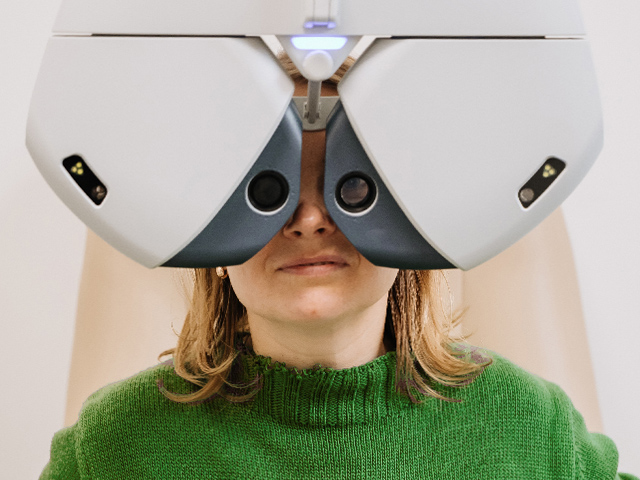
Regular comprehensive eye exams are essential for detecting macular degeneration before symptoms appear. At Alpha Eye Group, we use advanced diagnostic technology that allows us to identify even the earliest retinal changes.
These technologies include:
Optical Coherence Tomography (OCT): OCT provides detailed cross-sectional images of the retina, allowing doctors to detect subtle swelling, thinning, or structural changes associated with early AMD.
Optomap Retinal Imaging: This wide-field imaging captures a detailed view of the retina, often without dilation, helping identify early signs of macular degeneration and other retinal conditions.
Early detection gives patients access to treatment options, lifestyle guidance, and monitoring strategies that can slow progression and protect vision.
Early Warning Signs You Shouldn’t Ignore
While early AMD may not cause obvious symptoms, certain changes in vision should never be ignored. Contact your eye doctor if you notice:
Blurred or fuzzy central vision
Difficulty reading or seeing fine details, even with glasses
Straight lines appearing wavy or distorted
A dark, blurry, or empty spot in the center of your vision
Reduced brightness or intensity of colors
Increased difficulty recognizing faces
These symptoms may indicate changes in the macula and require prompt evaluation.
Stay Ahead of AMD at Alpha Eye Group
Macular degeneration often develops quietly, but its impact on vision can be life-changing if left undetected. Because early symptoms are easy to miss, routine eye exams and advanced retinal imaging play a vital role in identifying AMD before vision loss occurs.
If you are over 50 or experiencing changes in your vision, contact Alpha Eye Group to schedule your next eye exam to detect macular degeneration early. Visit our offices in Philadelphia, Wyomissing, Bethlehem Twp, Doylestown, Plymouth Meeting, or King of Prussia, Pennsylvania. Call (215) 698-7760, (610) 376-7272, (610) 866-1000, (215) 878-7181, (215) 230-4060, (610) 941-9780, or (610) 265-3100 to book an appointment today.
All Eye
Care Services

Keep
In Touch

© 2025 Alpha Optical Group. All rights Reserved - Accessibility Statement - Privacy Policy - Sitemap
Managed and Designed by
